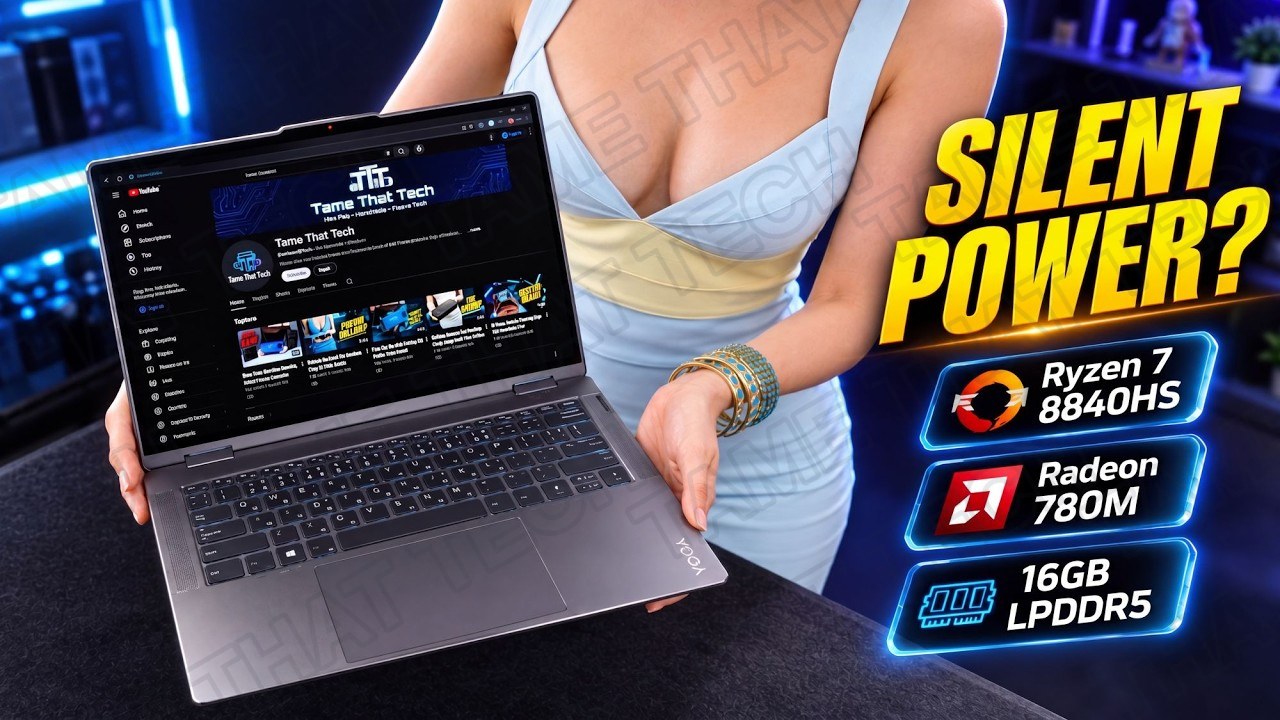
Lenovo Yoga 7 2-in-1 (16") Review: Silent AMD Beast or Creator Trap?
Convertible laptops promise the world: tablet, tent, laptop, all in one. The Lenovo Yoga 7 2-in-1 16” (16AHP9) actually delivers on most of it. Powered by the AMD Ryzen 7 8840HS with Radeon 780M integrated graphics, this 16-inch aluminum convertible is whisper-quiet, surprisingly capable at casual gaming, and priced to move. But a brutally honest display and a permanently soldered RAM ceiling mean it’s not for everyone. Here’s everything, measured.
Short version: it’s the quietest laptop in its class, and unless you’re a color-critical creator, there’s a lot to like. Just don’t plan on upgrading it.
TL;DR: The 10-second verdict
| What it is | A 16-inch AMD-powered premium convertible with a 360° hinge and Wacom stylus support |
| Who it’s for | Students, programmers, office workers who want quiet operation and light gaming in a premium 2-in-1 |
| The headline | Just 35.6 dB under full load: one of the quietest 16-inch laptops ever tested |
| The catch | 66.6% sRGB display is unusable for color work; 16GB soldered RAM can’t be upgraded; 2GB VRAM buffer crashes 4K video exports |
| Our take | A beautifully quiet daily driver with a genuine creator trap built into the display. Know what you’re buying |
| Where To Buy (Affiliate Links) | Amazon · Later · JoyLink |
| Video Review | YouTube |
Hardware & Specs
| Component | Specification |
|---|---|
| CPU | AMD Ryzen 7 8840HS: 8C/16T, 3.3 GHz base, up to 5.1 GHz boost, 28W TDP |
| GPU | Radeon 780M: 12 Compute Units (RDNA 3), 2GB UMA frame buffer |
| Memory | 16GB LPDDR5-6400 (soldered, quad-channel Samsung): non-upgradable |
| Storage | 512GB PCIe 4.0 x4 NVMe (Samsung MZAL8512HDLU: DRAM-less) |
| Display | 16.0” 1920×1200 WUXGA touch, 60Hz, 16:10, Wacom digitizer |
| Color Gamut | 66.66% sRGB · 49.42% AdobeRGB · 49.14% DCI-P3 · 47.22% NTSC: no HDR |
| Battery | 71 Wh (4-cell Celxpert) |
| Weight | ~4.4 lbs (2.0 kg) |
| Ports | 1× USB4 (40Gbps, PD + DP) · 2× USB-C 3.1 · 1× USB-A 3.1 · HDMI 2.1 · 3.5mm combo · Full-size SD card reader |
| Wireless | Realtek RTL8852CE Wi-Fi 6E + Bluetooth 5.3 |
| Chassis | Anodized aluminum, 360° hinge, Arctic Grey |
| Price | $849–$949 MSRP: frequently $649–$749 at Best Buy |
The port selection is genuinely impressive for a convertible. USB4 at 40Gbps, HDMI 2.1, and a full-size SD card slot cover most use cases without a dongle. The aluminum chassis feels rigid and premium, but the 4.4-pound weight makes handheld tablet mode a two-handed affair.
Design notes
- The 360° hinge is solid and allows tent, stand, and tablet modes. The built-in Wacom digitizer supports active stylus input.
- Trackpad grounding glitch: multiple community reports flag trackpad erratic behavior or stuttering when the AC charger is plugged in. Switching to a quality USB-C charger often resolves it.
- The display is the biggest letdown. At 66.66% sRGB and under 50% AdobeRGB, this panel is inadequate for photography, video grading, or digital art. External monitor required for color work.
- Peak brightness hovers around 300 nits, fine indoors, but washed out in bright environments.
CPU Performance
The Ryzen 7 8840HS is a Hawk Point APU with competitive single-core performance. Multi-core is slightly constrained by the laptop’s 20-35W power limits compared to mini PCs running the same silicon unrestricted.
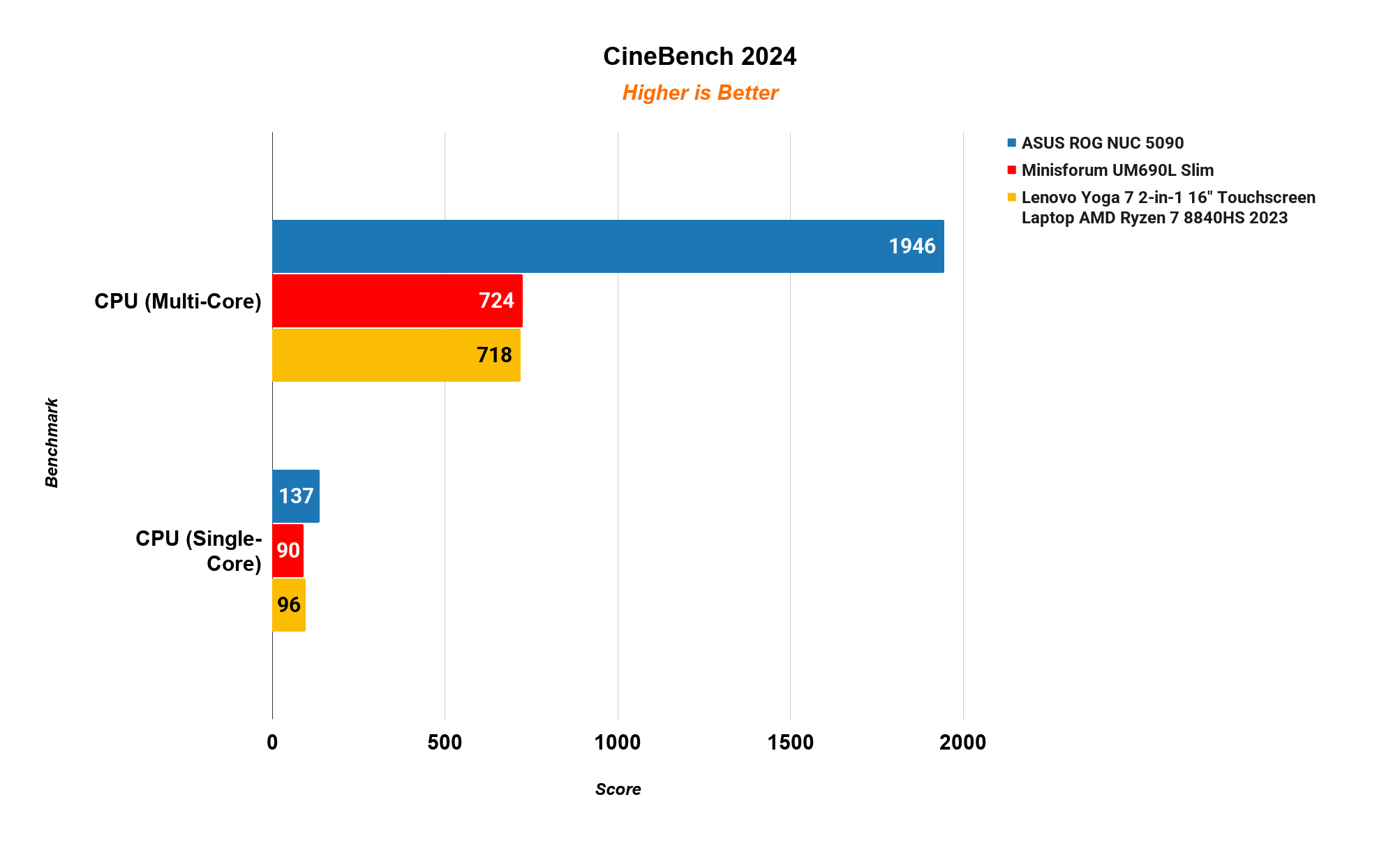
| Benchmark | Yoga 7 16” (8840HS) | Minisforum UM690L Slim (7735HS) | ASUS ROG NUC 5090 (Ultra 9 + RTX 5090) |
|---|---|---|---|
| CPU Multi-Core | 718 | 724 | 1,946 |
| CPU Single-Core | 96 | 90 | 137 |
Single-core performance edges out the 7735HS-powered UM690L Slim. Multi-core lands in the same ballpark, the laptop thermal limits keep it from pulling ahead.
Gaming Performance
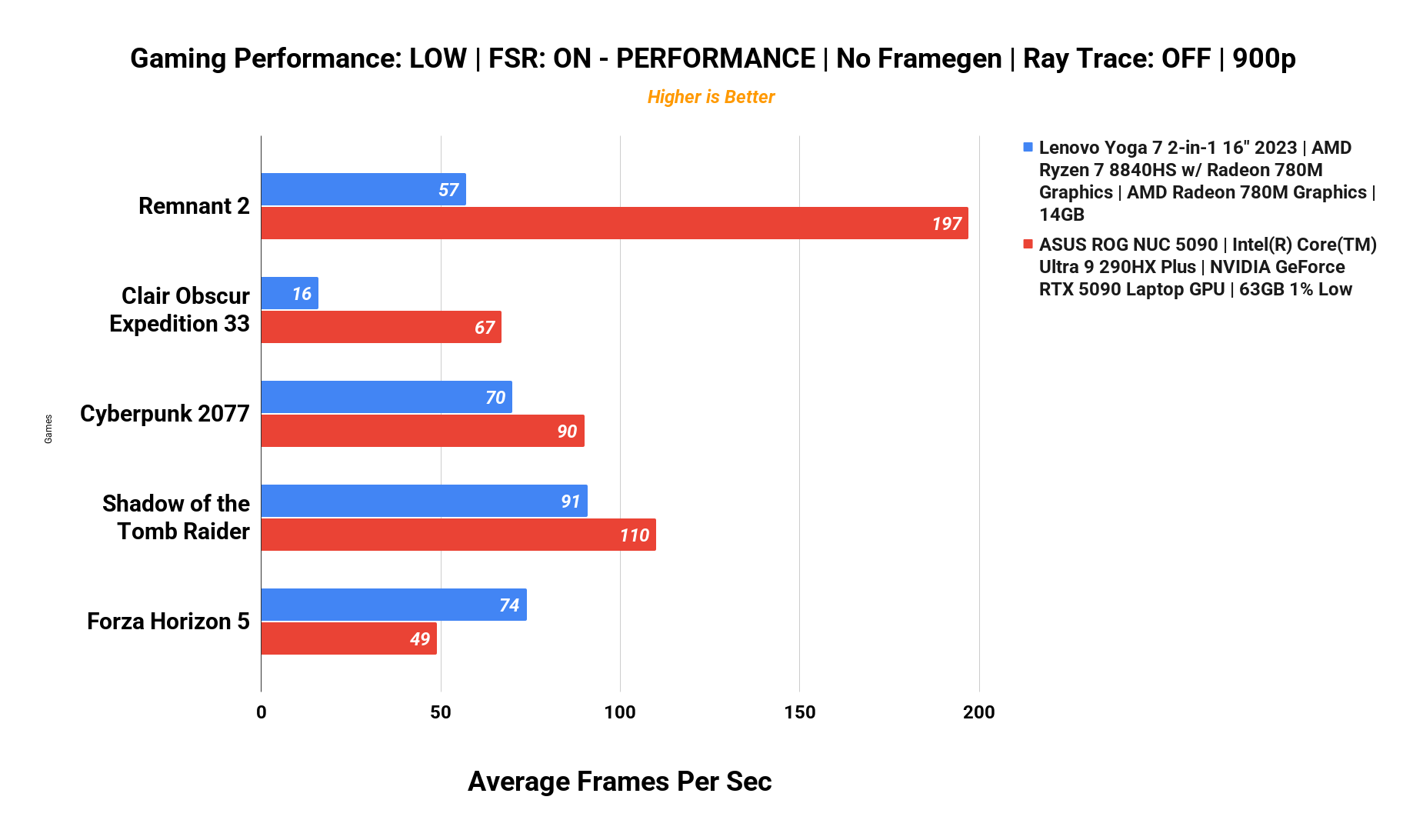
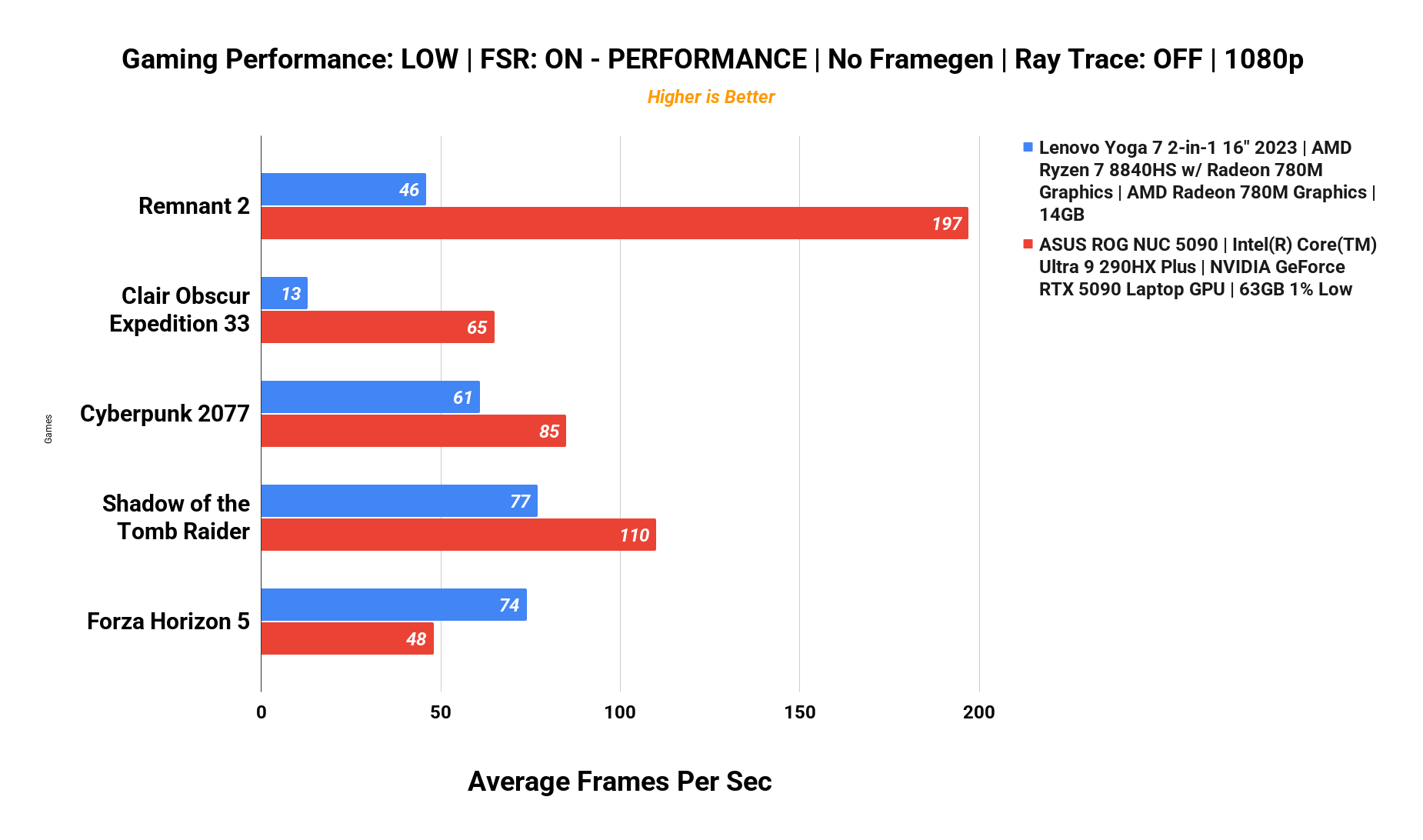
Settings: LOW quality, FSR ON (Performance), no frame generation, ray tracing OFF. Averages and 1% lows at each tested resolution.
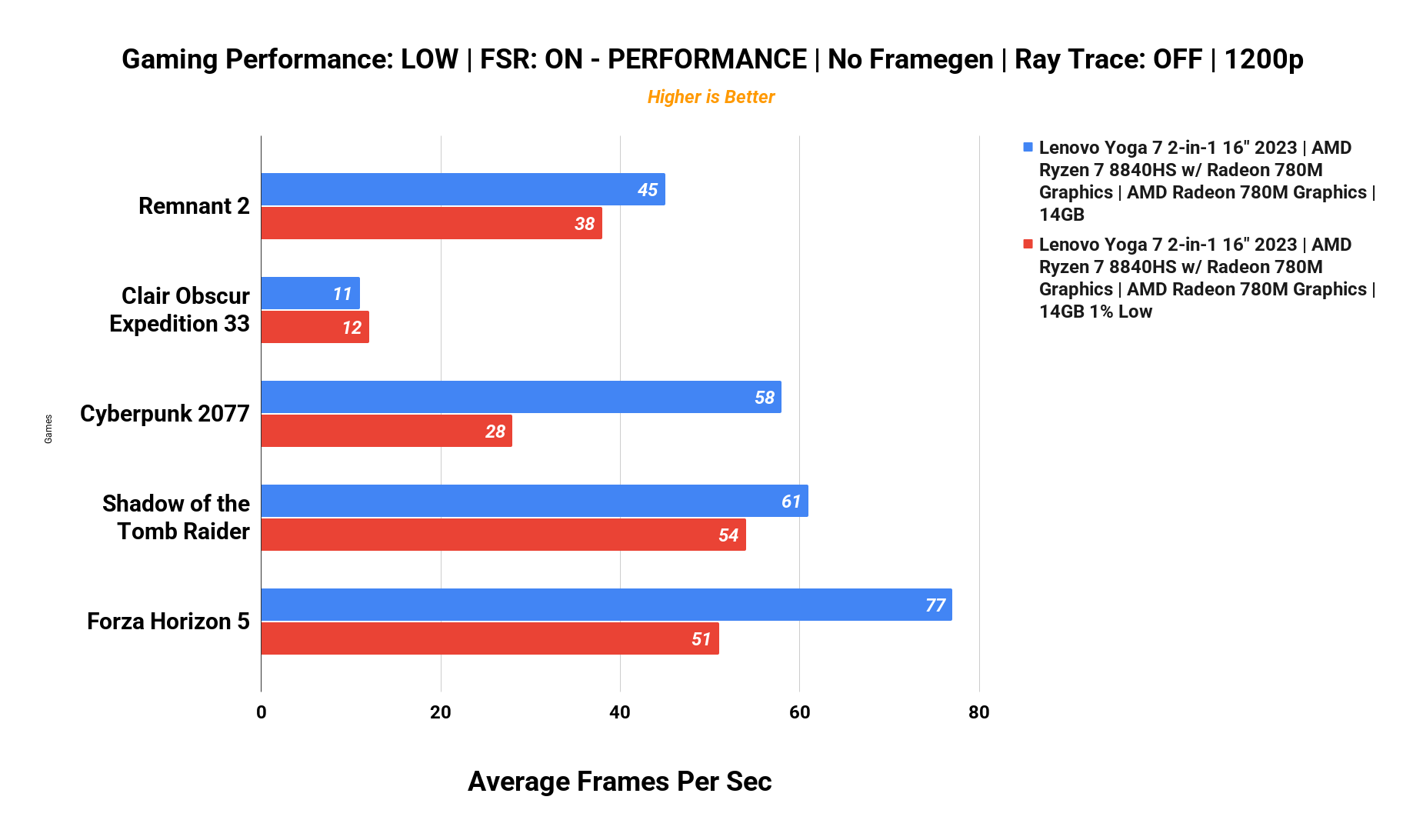
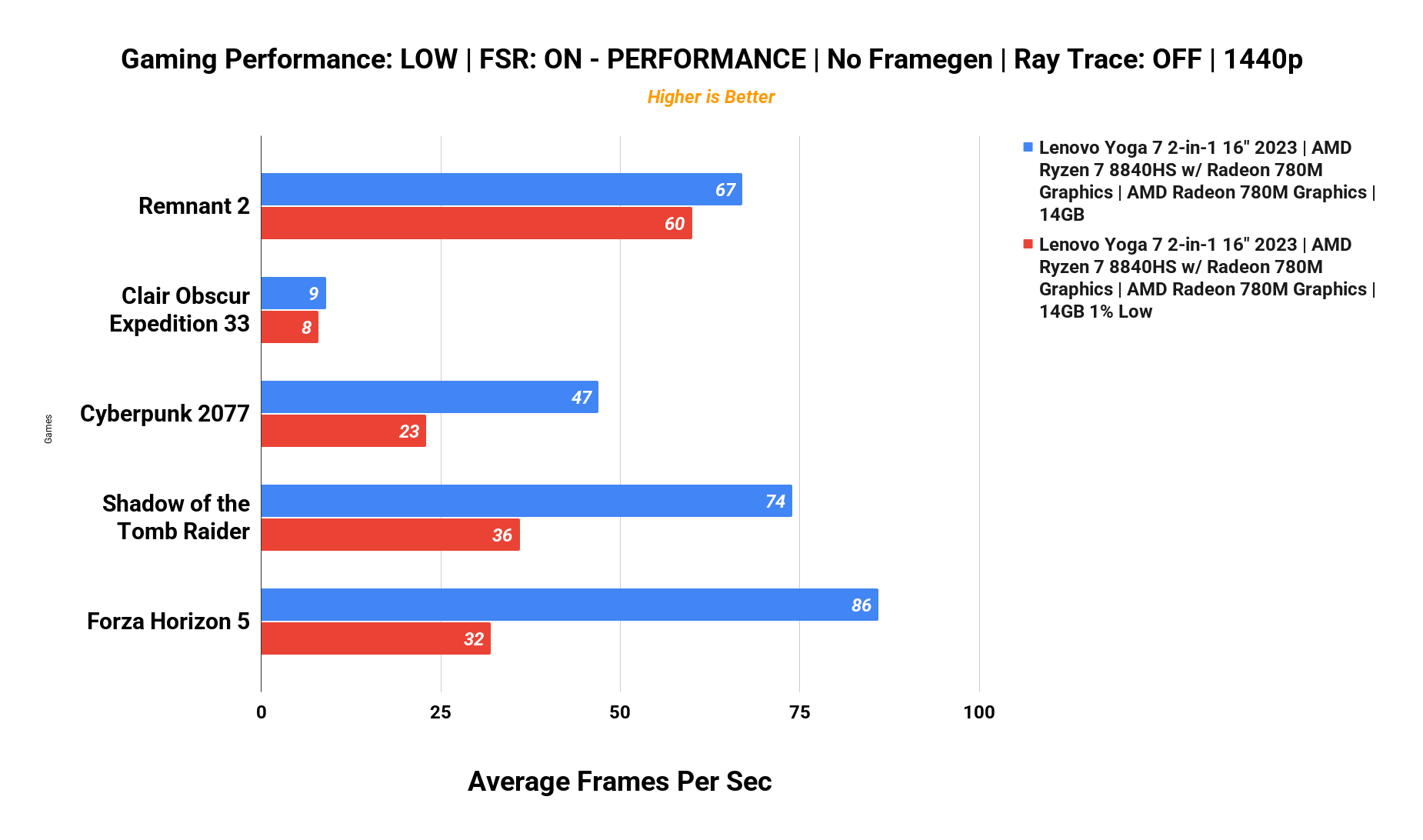
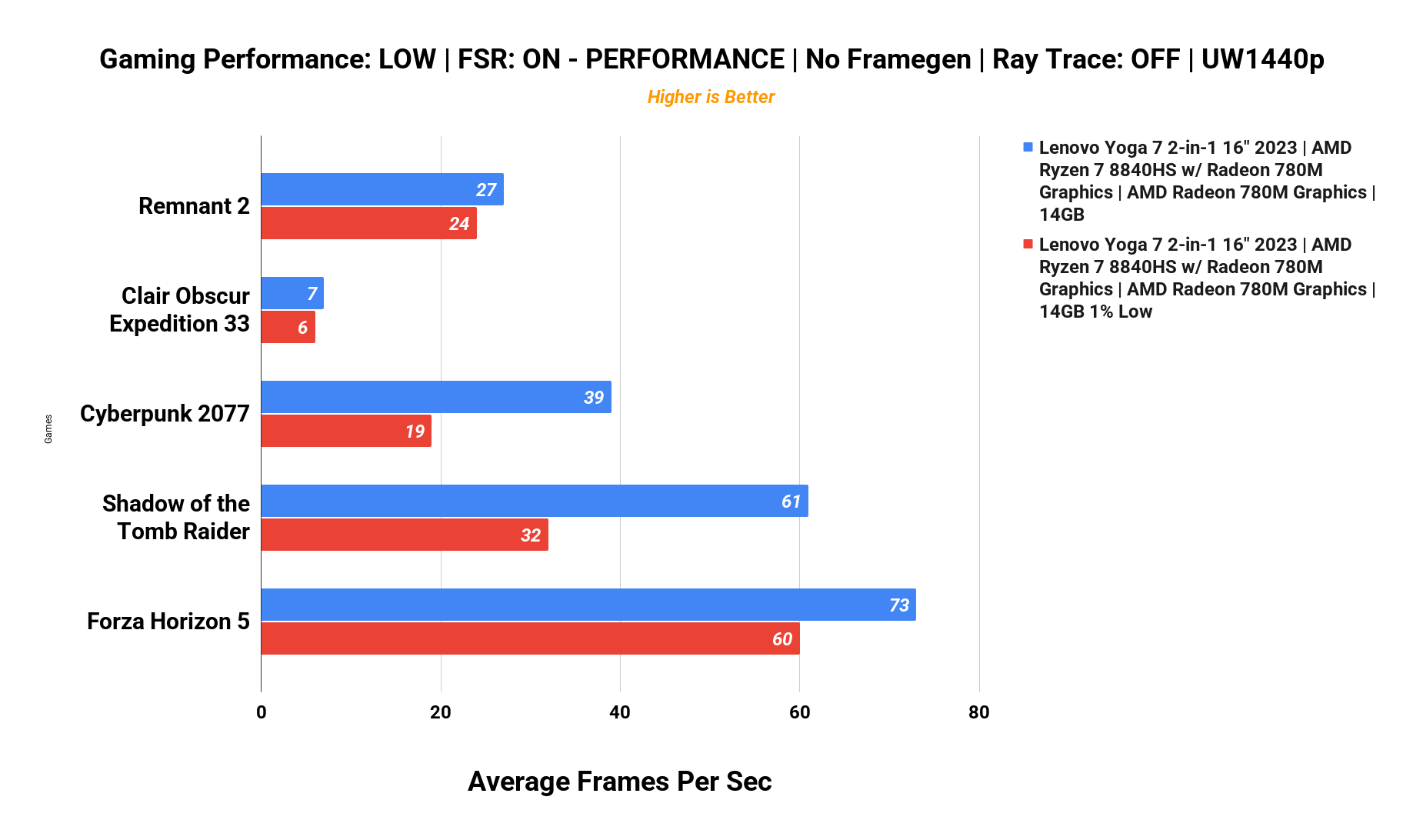
| Game (avg fps / 1% low) | 900p | 1080p | 1200p (native) | 1440p | UW 1440p |
|---|---|---|---|---|---|
| Forza Horizon 5 | 74 | 74 | 77 / 51 | 86 / 32 | 73 / 60 |
| Shadow of the Tomb Raider | 91 | 77 | 61 / 54 | 74 / 36 | 61 / 32 |
| Cyberpunk 2077 | 70 | 61 | 58 / 28 | 47 / 23 | 39 / 19 |
| Remnant 2 | 57 | 46 | 45 / 38 | 67 / 60 | 27 / 24 |
| Clair Obscur: Expedition 33 | 16 | 13 | 11 / 12 | 9 / 8 | 7 / 6 |
The Radeon 780M is easily the best iGPU on the market right now. At native 1200p, esports titles and slightly older AAA games run comfortably above 60 fps. Cyberpunk 2077 is playable at 58 fps average, though the 28 fps 1% low means combat gets choppy. Heavier modern titles like Clair Obscur are unplayable at any resolution. That’s a 2GB VRAM limitation.
Creator Workloads: DaVinci Resolve Studio
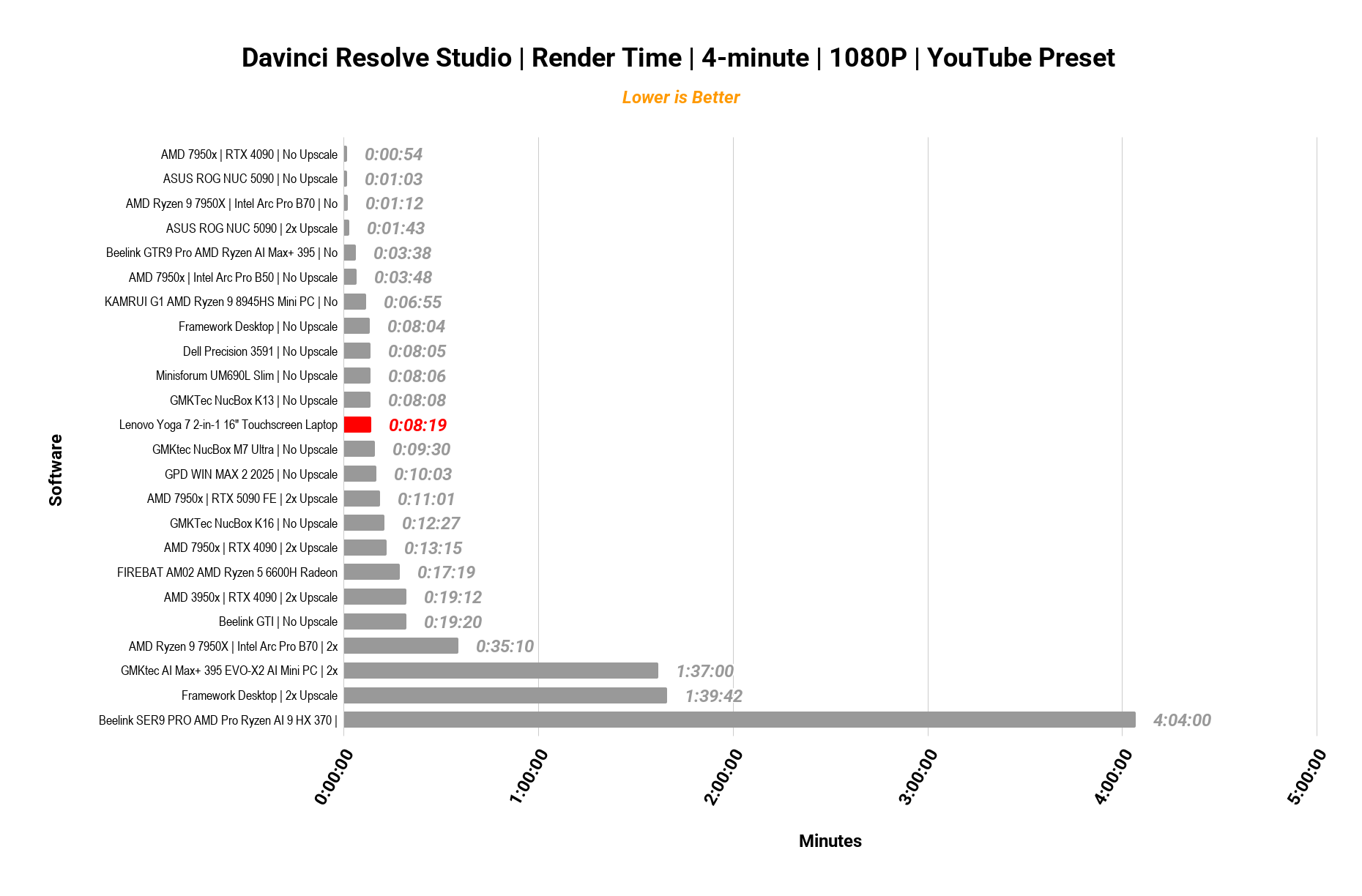
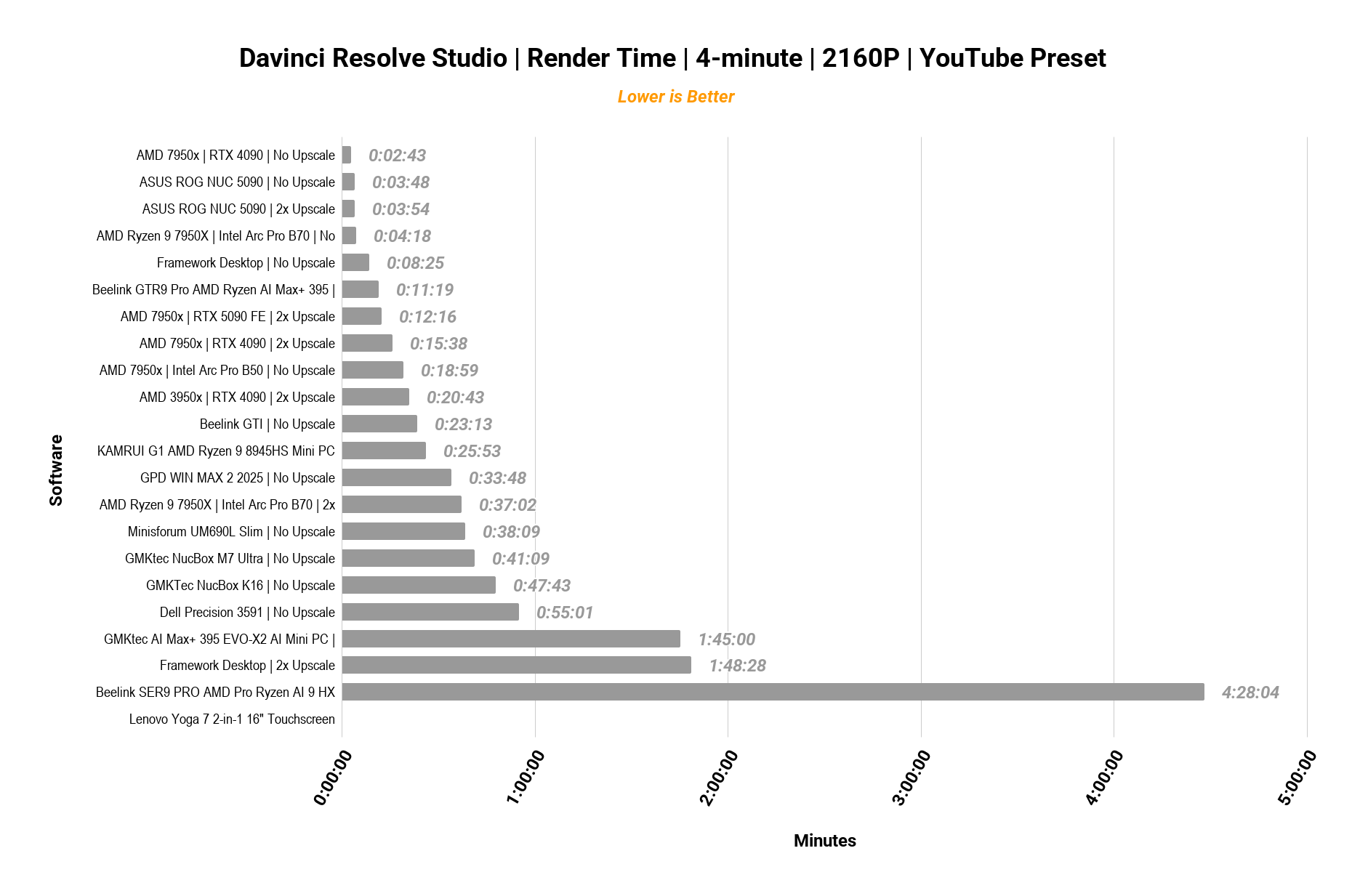
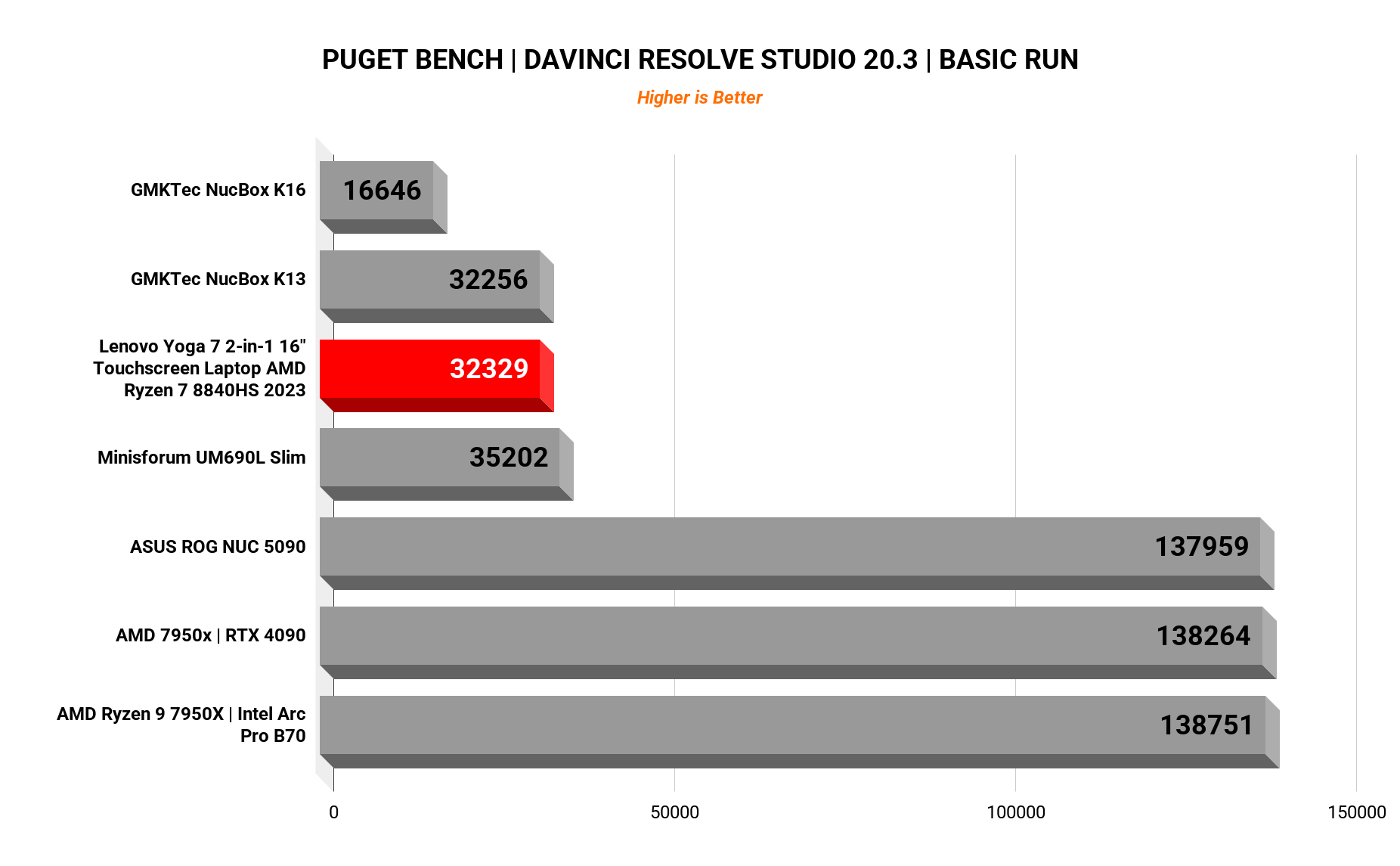
We rendered a 4-minute project on the YouTube preset and ran PugetBench for DaVinci Resolve Studio 20.3.
| System | PugetBench Score (Higher is Better) |
|---|---|
| GMKTec NucBox K16 | 16,646 |
| GMKTec NucBox K13 | 32,256 |
| Lenovo Yoga 7 16” (8840HS) | 32,329 |
| Minisforum UM690L Slim | 35,202 |
| ASUS ROG NUC 5090 | 137,959 |
At 1080p, the Yoga 7 rendered our 4-minute project in 8 minutes 19 seconds, faster than the NucBox M7 Ultra (9:30) and perfectly usable for casual editing. Timeline scrubbing was smooth with minimal stuttering.
But 2160p (4K) export crashed immediately with an Out of Memory error. The Radeon 780M defaults to a 2GB UMA frame buffer from the system RAM, and 16GB total isn’t enough when Resolve tries to load heavy 4K assets. You can increase the buffer to 4GB or 8GB in the BIOS, but that eats into already-limited system RAM. Stick to 1080p projects on this machine.
Local AI: LLM Benchmarks
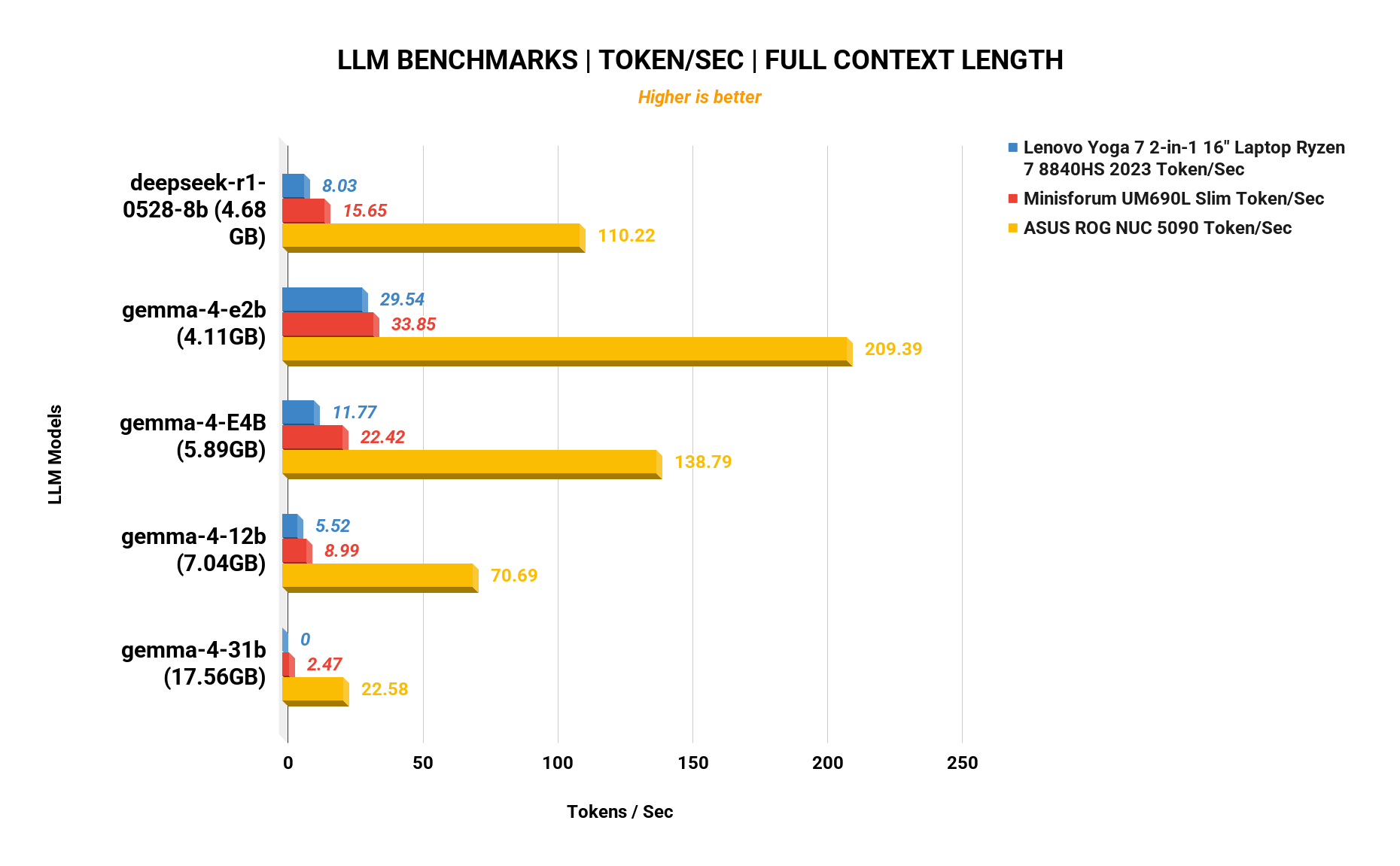
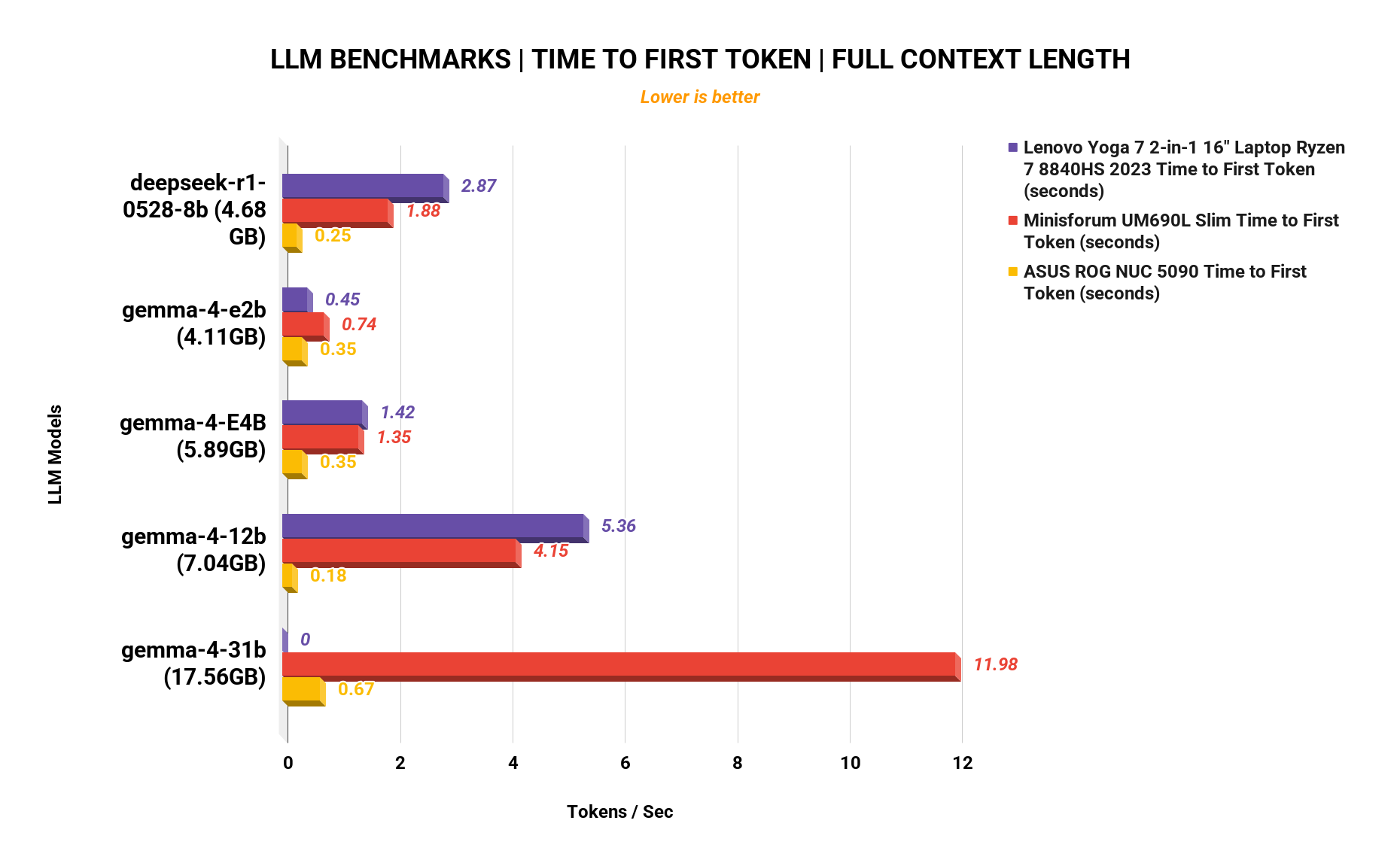
All tests run at full context length. The 8840HS includes a dedicated NPU (Neural Processing Unit), and it handles smaller models respectably.
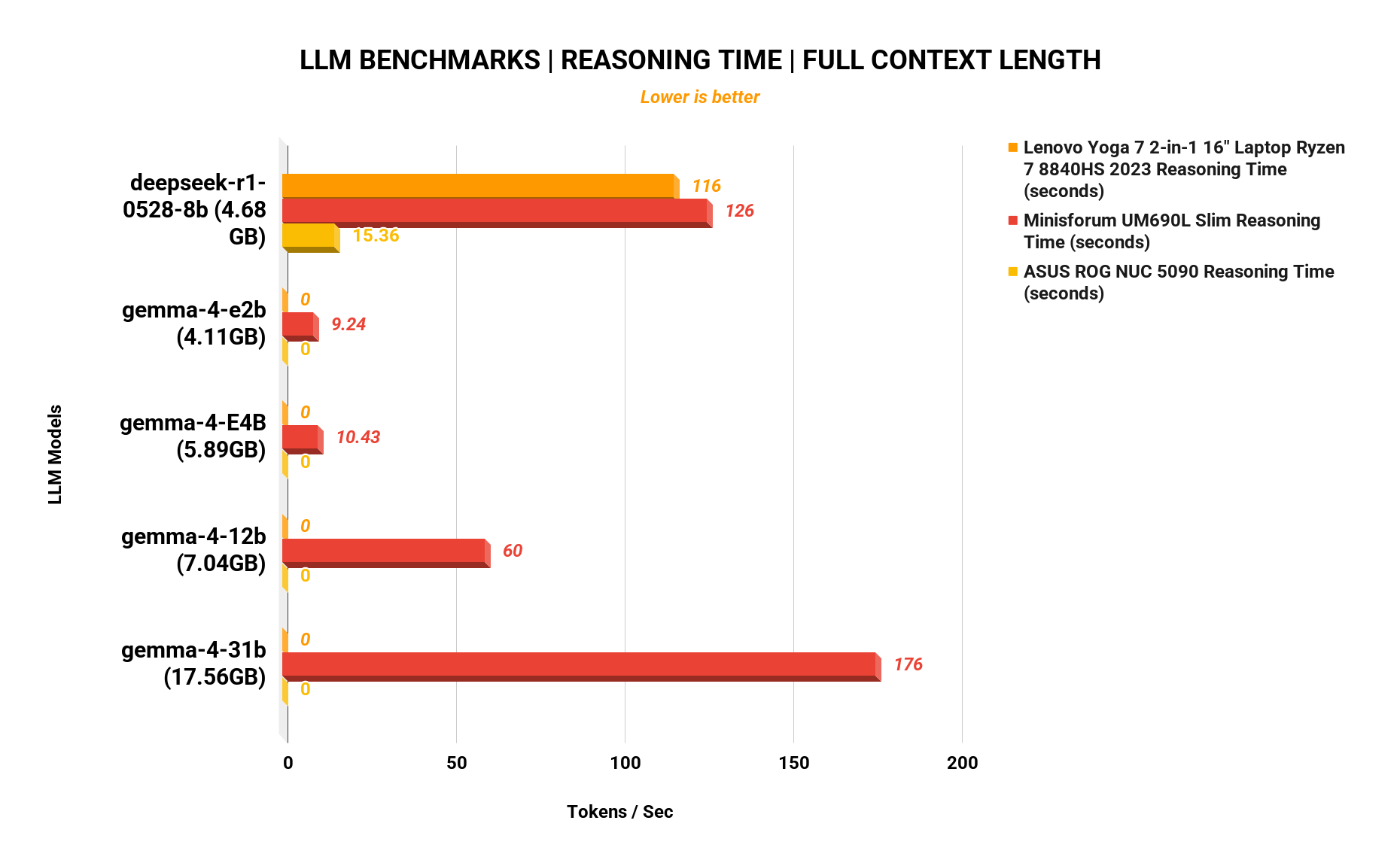
| Model (Size) | Tokens/sec ↑ | TTFT ↓ | Reasoning Time ↓ |
|---|---|---|---|
| deepseek-r1-0528-8b (4.68 GB) | 8.03 | 2.87s | 116.0s |
| gemma-4-e2b (4.11 GB) | 29.54 | 0.45s | 0.0s |
| gemma-4-E4B (5.89 GB) | 11.77 | 1.42s | 0.0s |
| gemma-4-12b (7.04 GB) | 5.52 | 5.36s | 0.0s |
| gemma-4-31b (17.56 GB) | FAILED (OOM) | : | : |
Small models fly, gemma-4-e2b at nearly 30 tokens/sec is genuinely usable for real-time chat. But any model above 12B parameters runs out of memory because of that 16GB ceiling. The same soldered RAM that blocks video editing blocks larger AI models too.
Power & Noise
This is where the Yoga 7 genuinely shines. Lenovo’s cooling design is exceptional for a thin convertible.
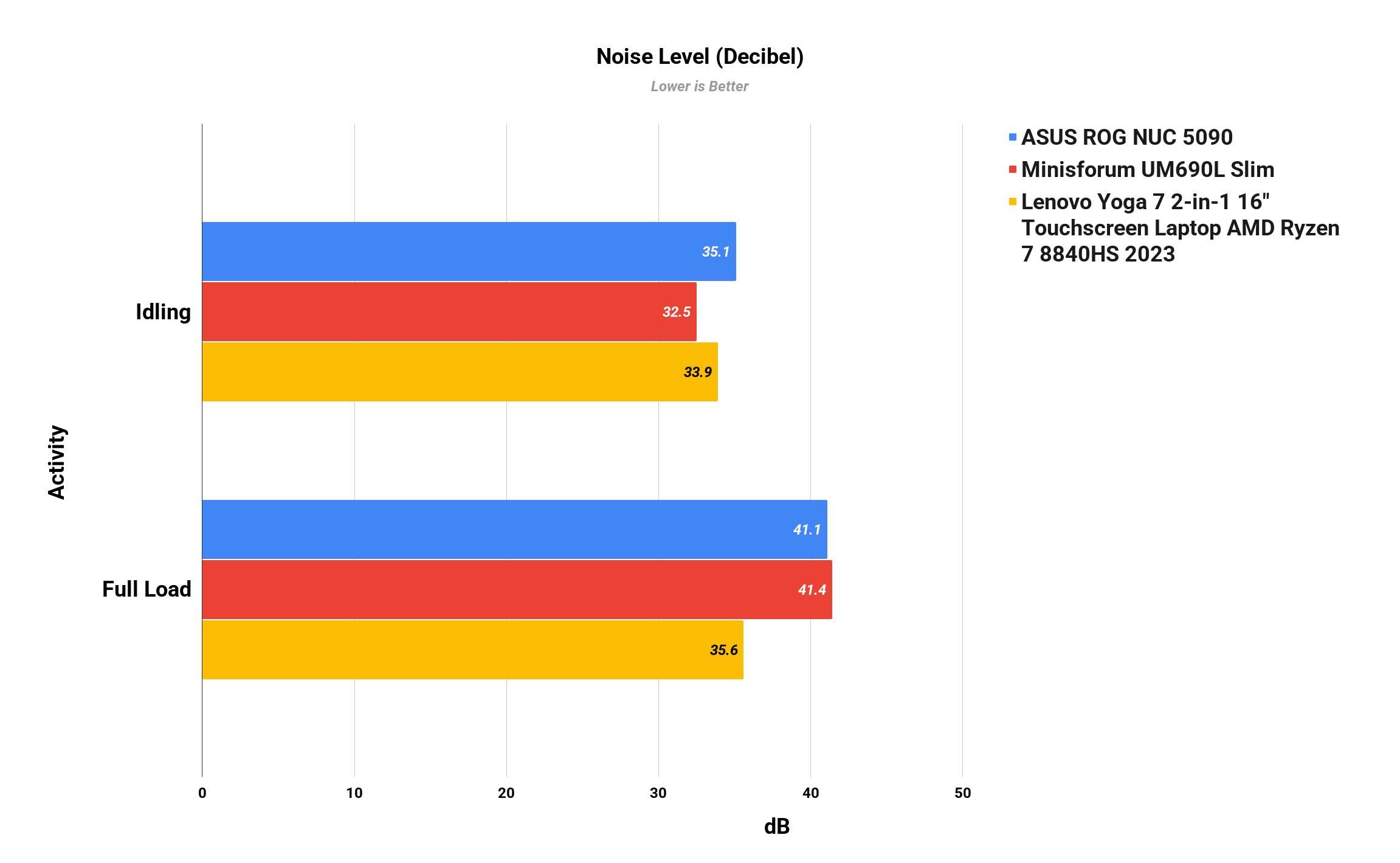
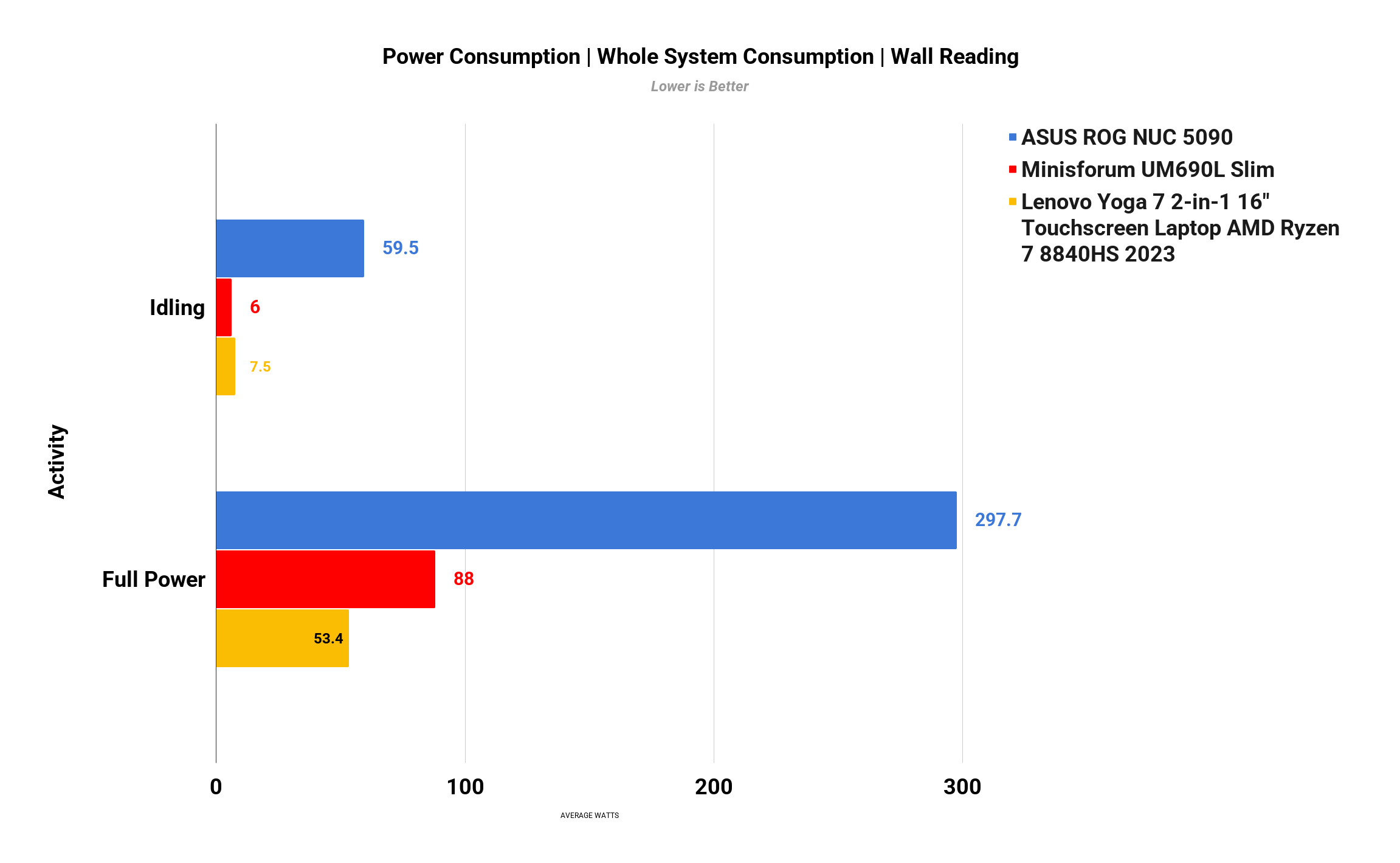
| State | System Power (Wall) | Noise Level |
|---|---|---|
| Idle | 7.5 W | 33.9 dB |
| Full Load | 53.4 W | 35.6 dB |
At idle, the machine is practically silent and draws just 7.5 watts: laptop-class efficiency that mini PCs can only dream of. Even under full synthetic load, fan noise barely increases to 35.6 dB. That’s a gentle, low-pitched hum you’ll barely notice in a quiet room. It’s easily one of the quietest laptops we’ve ever tested.
Price & Availability
The Lenovo Yoga 7 2-in-1 16-inch launched in early 2024 at an MSRP of $849.99–$949.99, but it’s frequently discounted to $649.99–$749.99 at Best Buy. At the sale price, it’s one of the better 16-inch convertible values on the market. At full MSRP, the display and soldered RAM make it harder to recommend against competitors with better panels.
- Best Buy, most consistent availability, frequent sales
- Lenovo.com, sometimes offers customizable specs
- Amazon, third-party configurations, check the seller
Pros & Cons
Pros
- Incredibly quiet: 35.6 dB under full load, practically silent at idle
- Exceptional power efficiency: 7.5W idle draw
- Strong iGPU gaming. Radeon 780M handles esports and older AAA titles comfortably
- Premium build, anodized aluminum chassis with a solid 360° hinge
- Great port selection. USB4, HDMI 2.1, full-size SD card reader
Cons
- Poor display gamut: 66.6% sRGB, unsuitable for color-critical work
- Soldered 16GB RAM, no upgrade path to 32GB
- 2GB VRAM buffer, causes OOM crashes in 4K video exports and large LLM models
- Trackpad grounding glitch, erratic behavior when AC charger is plugged in
- Low peak brightness, ~300 nits, struggles in bright environments
The Bottom Line
The Lenovo Yoga 7 2-in-1 16” is a premium-feeling convertible that gets the hard things right (thermals, noise, efficiency) and fumbles on the basics. The display is the biggest problem: 66.6% sRGB in a laptop marketed to creators is a genuine trap. If you need color accuracy for photography, video grading, or digital art, plug in an external monitor or buy something else.
But if you’re a student, programmer, or office worker who wants a quiet, capable daily driver with light gaming chops, the Yoga 7 is excellent: especially at the $649 sale price. The Radeon 780M punches above its weight, the 16-inch 16:10 touchscreen is spacious for productivity, and the fan noise is so low you’ll forget it’s there. Just know that the 16GB RAM ceiling is permanent, and plan your workloads accordingly.
Test unit: Lenovo Yoga 7 2-in-1 16AHP9, Ryzen 7 8840HS, 16GB LPDDR5-6400, 512GB SSD, provided by Lenovo.
— Tame That Tech Minion
Discussion